
Dr. Hossein Rezai on the Future of Design: Fusion Engineering and Regenerative Architecture
Published on September 8, 2025 | by DSGN arcHive
Curious about the future of design? Explore our exclusive with Dr. Hossein Rezai on what it takes to be future-ready.
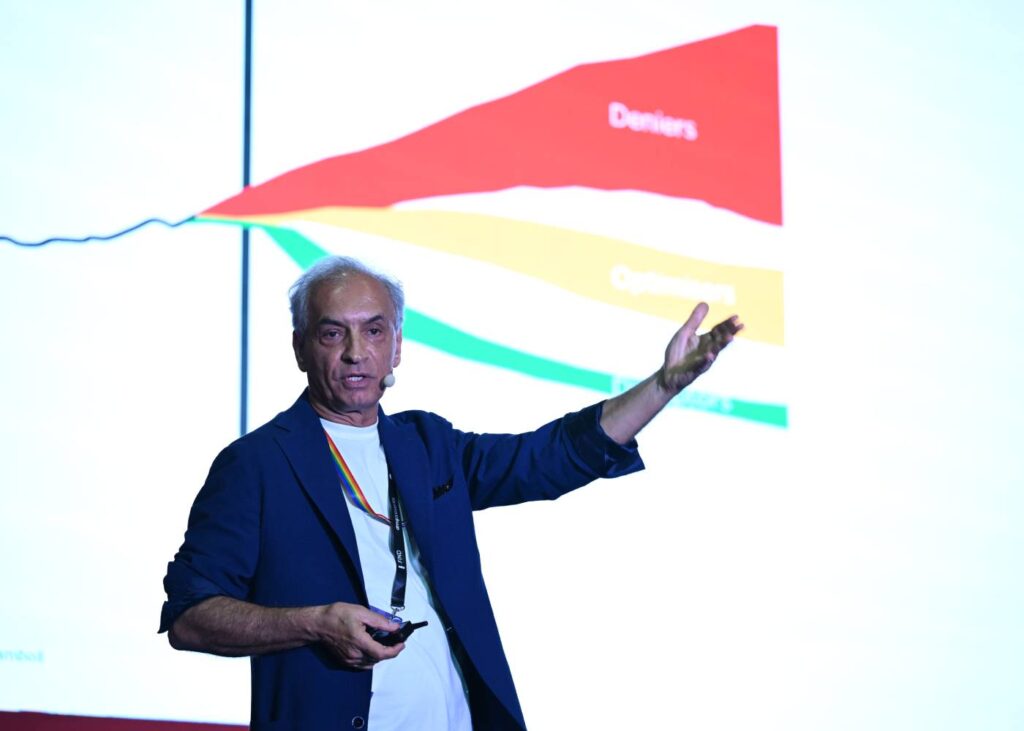
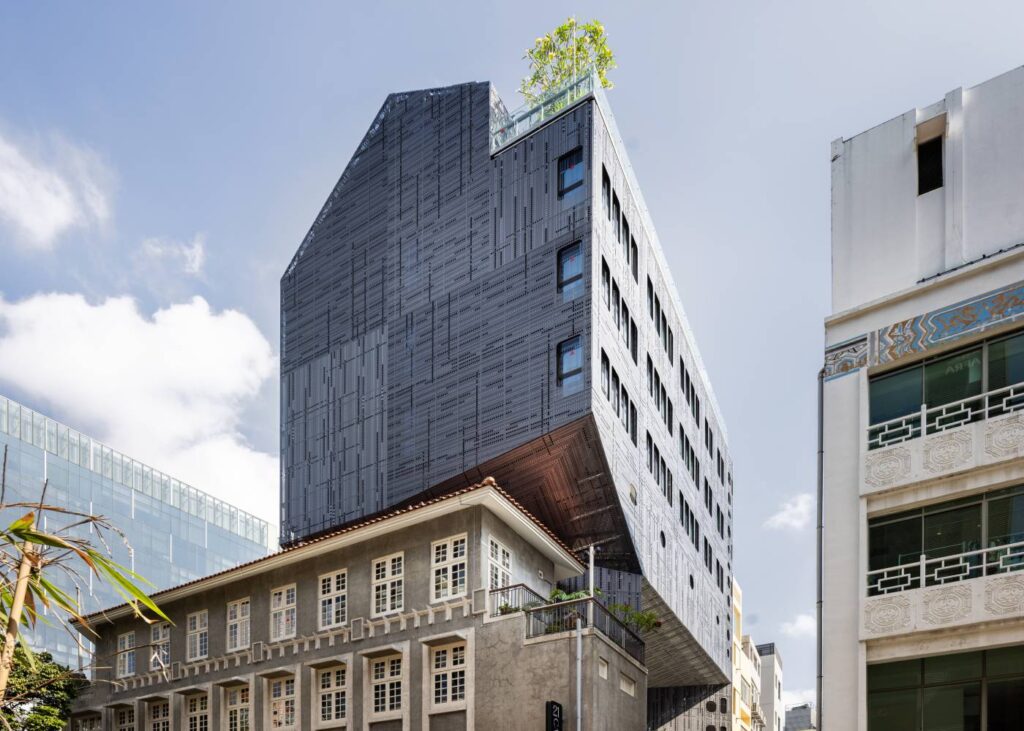
What if the real question about the future isn’t where we want to go, but which present we need to choose to get there? It’s this powerful shift in perspective that drives the work of Dr. Hossein Rezai, the internationally recognised engineer and designer whose concept of fusion engineering has redefined how structure, design, and ecological responsibility come together. From Kuala Lumpur’s striking Troika towers to Singapore’s Mediacorp Campus, his projects embody a vision where design is more than form and function—it’s a tool for resilience, regeneration, and cultural continuity.
We had the privilege of speaking with Dr. Rezai to learn more about his contributions and philosophies in design and engineering, and how his work continues to shape global conversations on regenerative futures, embodied carbon, and data-driven frameworks. Keep scrolling for our exclusive interview, where Dr. Rezai reflects on his journey and offers a glimpse into the regenerative futures he envisions.
Dr. Hossein Rezai on the Next Frontier of Design
1. Design surrounds us every day, but not everyone sees its deeper power. Was there a moment when you realised architecture and engineering could move beyond beauty to truly transform and uplift the world?
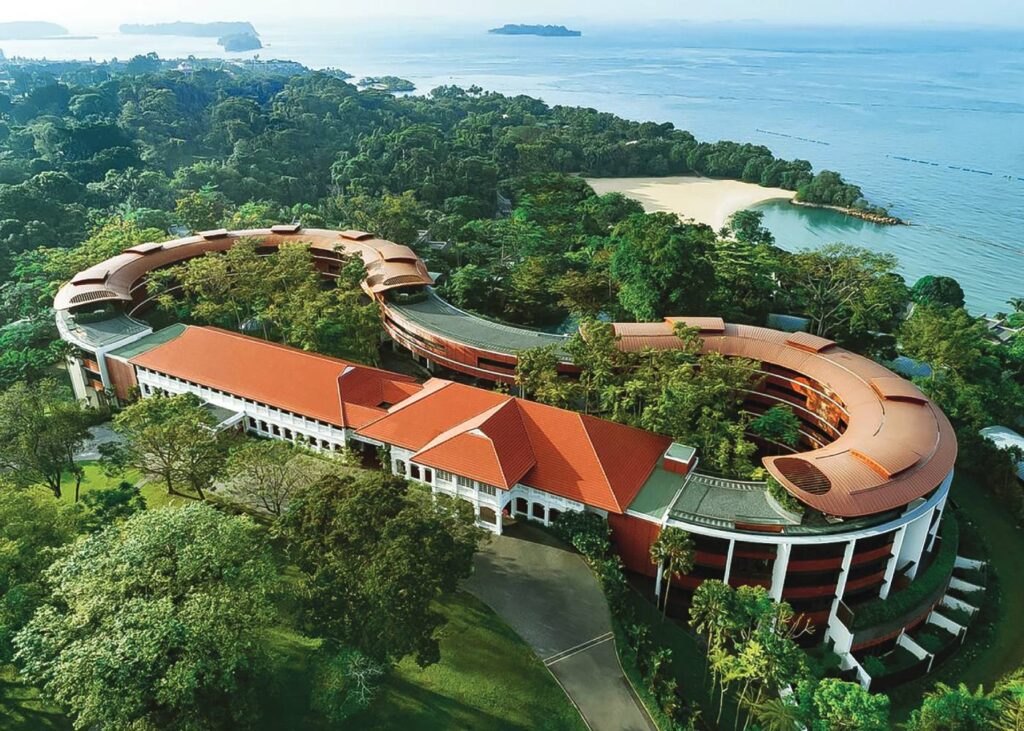
Dr. Hossein Rezai: Everything we see around us is designed by someone. Things go through various stages of conceptualisation, schematic, and design development stages, then detailed design, procurement and actual manufacturing or construction. These design stages rarely happen in a linear manner. On many occasions, the findings and revelations at one design stage necessitates taking a step back and changing a decision made at a previous design stage. This constant journey in design stages and time, while making the process complex, enriches the experience of the eventual users of the product.
Design may be about aesthetics or beauty to some. Others see purpose and value in what design and designers create. In fact, it is this multi-faceted nature of design and engineering that makes the experience of designers, architects, and engineers so enriched. Products and buildings must clearly be useful and respond to a physical need, but at the same time, they can and must create delight, beauty, and memory. The power of good design is to create and contain an environment where potentially conflicting drivers co-exist and co-habit in a state of positive, dynamic, and constant tension.
2. You’ve pioneered ‘fusion engineering,’ blending structure and design seamlessly. How do you show that this harmony isn’t just an idea, but something tangible in real-world projects?
Dr. Hossein Rezai: Fusion engineering challenges the traditional understanding of design outcomes, which is predicated on a spectrum. At one end, design outcomes are utilitarian, basic, uninspiring, and cheap; at the other, they are delightful, aesthetically pleasing, creative, innovative, and therefore expensive. Fusion engineering, in essence, fuses these two ends into an outcome that carries the positive attributes of both. This is achieved when engineers, architects, and designers adopt a trans-disciplinarian attitude towards the product or building they are co-creating. The approach differs from the traditional reductionist model, where each discipline is responsible for only one aspect of the final product—for example, engineers ensuring that the end product is safe, buildable, and compliant, while ignoring all other attributes. The team, instead, approach the entire design brief with an open mind and in a systemic perspective, where the end product is the shared responsibility of all consultants.
The outcome of such a holistic and collective attitude towards the brief is a structure that serves a higher purpose: spaces, which in turn serve an even higher purpose —the users’ experience. In this respect, a structural element that needs to be of a certain size or scale to be congruent with the eventual space will be no larger than necessary, and is therefore less costly. This is where beauty and aesthetics are fused with economy, yielding products that are not only better, but also more affordable.
3. How have different cultures shaped your approach to regenerative design, and can you share a project that brought this to life, including the key lessons and hurdles along the way?
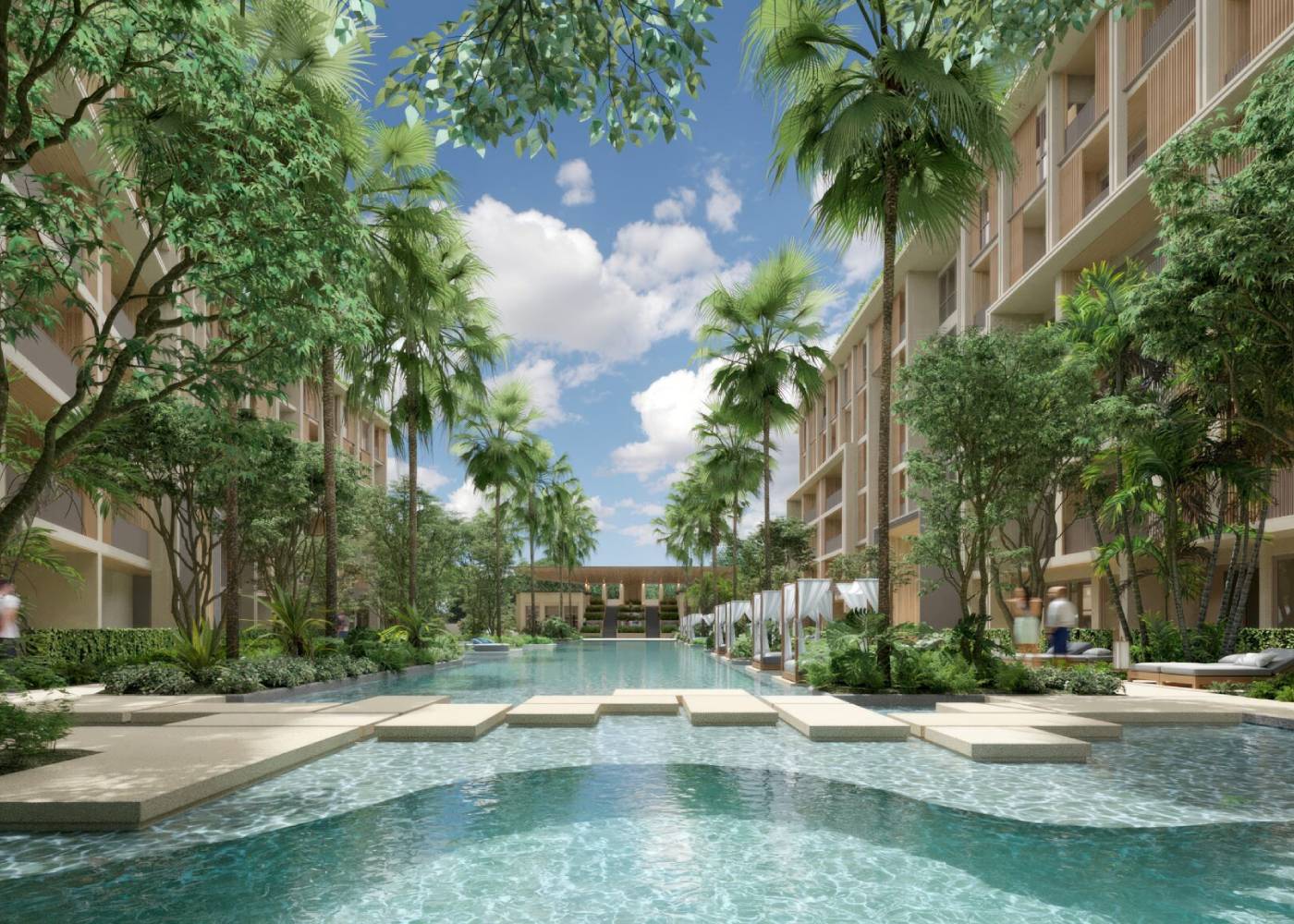
Dr. Hossein Rezai: Regenerative design is about ecology, and ecology is about water, greenery, biodiversity, greenhouse gas emissions, and more. We call these design drivers, “regenerative attributes.” A regeneratively designed building or neighbourhood, for instance, is one where one or more of these attributes have been regenerated and enhanced by the new building. For example, the rainwater and wastewater systems on a site may be improved during construction so that they function better after the building is completed than they did before. This is the essence of regeneration.
Given the constraints within which we design and operate, we also recognise that a project may not be able to embody all regenerative attributes, and may even include one or more degenerative aspects. For instance, a green roof can help enhance the water circulation system, help reduce heat island effects, and support biodiversity— all positive and regenerative attributes. However, it may also require a heavier roof and additional structural support, leading to greater embodied carbon, which is a degenerative attribute.
The upshot of this is that, at present, we may not be able to claim a fully regenerative project in totality, but rather projects that incorporate one or more regenerative attributes. This reality applies across the design, architecture, and engineering industries.
4. You’ve said that foresight is less about the future we imagine and more about the present we create. How do you guide teams and cities to design with resilience and purpose in uncertain times?
Dr. Hossein Rezai: This is one of the key questions of our time. The deeper enquiry concerns the future we innovate and design for. It is therefore imperative that we develop a clear sense of the future we want to create. The good thing about the future is that it does not, in fact, exist yet. This gives us a blank canvas to create and design the future we desire to manifest.
Of the many possible futures that foresight may reveal to us, each is linked to a slightly different present. In other words, there are as many present states as there are possible futures, each future scenario beginning from a corresponding present. The key lesson, therefore, is to search for and find the required present that leads to the future we desire. The analogy of a train station describes this multi-present state reasonably well. When we are in a major train station, there are multiple trains leaving from multiple platforms, each to a different destination (future). If the train to one’s desired destination (read future) leaves from platform 18, then one must move to platform 18 in order to reach the desired destination. The journey to the desired future, therefore, starts with an immediate shift in the present state; one might call a disruption of the present.
Applying these principles to resilience, for example, can yield good and practical lessons. If the future we desire is a regenerative one, then the required design for resilience is one that leads us to a regenerative future (a world limited to 1.5 degrees of warming compared to the pre-industrial era of the 1790s), rather than toward a degenerative future projected to be 4 degrees warmer. This approach adopts regenerative design as a climate adaptation strategy to achieve resilience for the future we want to manifest and create.
The actual techniques and methods for reducing impacts of environmental drivers like GHG emissions, biodiversity loss, and others are widely available. For every environmental challenge we face, there is a technically viable solution. What we lack is the imagination and foresight to envision a flourishing future—and the supportive policies to make it real—so that scientific and technical progress can be harnessed to its fullest potential.
5. What mindset or skills do you hope the next generation of architects and engineers will carry forward as the design world continues to evolve?
Dr. Hossein Rezai: The complexities and uncertainties which have become the hallmarks of our time, require us to move beyond the silos of individual specialisations, and merge pillars of design and science in order to create trans-disciplinarians for the future. A trans-disciplinarian is not a “jack of all trades and master of none” but rather a “master of many”—someone with a deep grasp of multiple disciplines who can integrate science, engineering, design, and other fields into one. The future we desire requires more trans-disciplinarians. The advent of technology, digitalisation, and augmented intelligence will pave the way for the creation of more such personas.
6. Looking ahead, what legacy do you hope your work leaves on the built environment—and how do you envision design evolving to address climate, equity, and the challenges of our shared future?
Dr. Hossein Rezai: Looking back over the past 30 years, one might conclude that we had no right to succeed. When I compare the resources we have now with the meagre ones available to us back then, I wonder how we managed to get through, not only to survive but to thrive. The lesson for me is that the right to success does not inherently exist. It is something we create day in and day out—through resilience, grit, hard work, and of course with competence, passion, and a seemingly unrealistic conviction that one’s desired future is within grasp though ever moving.
A big thank you to Dr. Hossein Rezai for sharing such thoughtful and inspiring insights with us. If you’d like to hear more from him in person, don’t miss his session at the FIND – Global Summit 2025:
Panel: One Past, Many Futures, Multiple Presents
Date & Time: Thursday, 11 September, 2:55 PM – 3:40 PM
Venue: FIND – Global Summit 2025, Singapore
Pre-register by September 10th, 2025, for complimentary access to this must-attend industry event!
About FIND - Global Summit
FIND – Global Summit returns in 2025 with its most expansive edition yet, convening leading voices from design, architecture, and business to explore how creativity can respond to urgent global challenges and shape more intelligent, inclusive, and impactful built environments. Across three days featuring over 60 speakers from 23 countries, the summit spans dozens of sessions of critical dialogue – from urban resilience and AI innovation to purposeful luxury and urban transformation. Building on the success of its 2024 edition, which attracted over 2600 attendees, the 2025 summit will take place from 11 to 13 September at FIND – Design Fair Asia, a key event of the Singapore Design Week, at Marina Bay Sands Expo & Convention Centre, affirming its role as a key platform for Asia’s design leadership community.
About FIND - Design Fair Asia
FIND – Design Fair Asia is a joint venture between dmg events (organizers of well-known global shows Big5, INDEX, HiDesign etc.) and Fiera Milano (leader in Italy and one of the main integrated operators worldwide in the exhibition and congress industry). It is a combination trade show and design fair, offering a carefully curated selection of furniture, interiors, and design brands. The anchor event of the Singapore Design Week (organized by DesignSingapore Council) acts as a stimulating marketplace connecting leading suppliers across furniture, lighting, décor, textiles, design technology, home, kitchen, bathroom and surface materials with retail buyers, residential and commercial property developers, architects, hospitality professionals, interior designers, high-net-worth individuals, and Asia-based FF&E contractors.
With key stakeholders such as DesignSingapore Council and numerous regional partner associations, FIND is to return to the iconic Marina Bay Sands in Singapore with extended event offerings on over 11,000 sqm, 250 international brands, a VIP buyer program, and exciting on-site initiatives.
What's New

Wondering what we’re up to next?
Give us a follow and stay in the loop!
About DSGN arcHive
DSGN arcHive is your exclusive key to unveiling the enigmatic essence of a city, all filtered through the prism of design. Far from the ordinary tourist paths. We reveal the city’s architectural marvels, urban intricacies, cultural tapestry, and eco-conscious revolutions that mold its distinctive soul. With us, you’re invited to savor the metropolis in an entirely chic and sophisticated light, a city that’s far more than what meets the eye.
Copyright © 2026 DSGN arcHive